Hey there! I’m a supplier for snack food production lines. You know, running a snack food production line smoothly is no walk in the park. There are so many moving parts, and managing the production schedule is like conducting a symphony. In this blog, I’ll share some insights on how we handle the production schedule for snack food production lines. Snack Food Production Line

Understanding the Basics of Production Scheduling
First off, let’s get into what production scheduling is all about. It’s basically the process of planning and organizing the production activities to make sure everything runs efficiently. For a snack food production line, this means deciding when to start and stop each production process, how much raw materials to use, and when to expect the finished products to be ready.
One of the key things we do is analyze the demand for different snack products. We look at historical sales data, market trends, and customer feedback to figure out how much of each snack we need to produce. For example, if we notice that a certain type of chip is really popular during the summer months, we’ll plan to produce more of it in the lead – up to summer.
Setting Up the Production Schedule
Once we have a good understanding of the demand, it’s time to set up the production schedule. We start by breaking down the production process into smaller tasks. A typical snack food production line might involve tasks like mixing the ingredients, forming the snacks, baking or frying them, and then packaging.
We assign specific time slots for each task. For instance, we might allocate two hours for mixing the ingredients, three hours for baking, and then one hour for packaging. This way, we can create a timeline for the entire production process.
Another important factor is the availability of resources. We need to make sure that we have enough raw materials, such as flour, sugar, and oils, as well as the necessary equipment. If a particular machine is going to be under maintenance, we need to adjust the production schedule accordingly. We can’t just keep producing if we don’t have the right tools or ingredients.
Dealing with Bottlenecks
In any production line, bottlenecks are bound to happen. A bottleneck is a point in the production process where the flow of work is slowed down. It could be because a machine is working at a slower pace than expected, or there’s a shortage of a particular raw material.
When we encounter a bottleneck, the first thing we do is identify the root cause. Is it a machine issue? Maybe it needs to be repaired or upgraded. Or is it a raw material problem? We might need to find a new supplier or adjust our ordering schedule.
Once we’ve identified the problem, we come up with a solution. If it’s a machine issue, we might schedule urgent maintenance or re – assign some of the production to another similar machine. If it’s a raw material issue, we can try to speed up the delivery or switch to a different ingredient if possible.
Communicating with the Team
Communication is key in managing the production schedule. We need to keep everyone on the same page, from the production workers to the quality control team. We use regular meetings to discuss the production schedule, any issues that have come up, and the expected progress.
For example, at the start of each shift, we’ll have a short meeting to go over what needs to be done during that shift. The production workers know exactly what tasks they need to complete, and the quality control team knows when to expect the products for inspection.
We also use digital tools to communicate. There are apps that allow us to share real – time updates on the production status. If there’s a delay in one part of the production line, everyone can see it immediately and adjust their work accordingly.
Contingency Planning
No matter how well we plan, there are always unexpected events that can disrupt the production schedule. That’s why we have contingency plans.
For instance, if there’s a sudden power outage, we have backup generators in place to keep the most critical parts of the production line running. If there’s a problem with a major supplier, we have a list of alternative suppliers that we can turn to.
We also keep some extra inventory of key raw materials. This way, if there’s a delay in the delivery of a particular ingredient, we can still continue production for a short period of time without having to shut down the whole line.
Monitoring and Adjusting the Schedule
The production schedule is not set in stone. We need to monitor it constantly and make adjustments as needed. We use key performance indicators (KPIs) to measure the efficiency of the production line. Some of the KPIs we look at include the production output per hour, the percentage of defective products, and the on – time delivery rate.
If we notice that the production output is lower than expected, we’ll dig deeper to find out why. It could be that the workers are not trained properly, or there’s a problem with the equipment. Based on our findings, we’ll make changes to the production schedule or the production process.
We also update the schedule based on any changes in the demand. If a new customer places a large order, we might need to reschedule some of the existing production to accommodate it.
Building Long – Term Relationships
As a snack food production line supplier, we also focus on building long – term relationships with our customers. When we understand our customers’ needs and production goals, we can provide better support in managing their production schedules.
We work closely with them to understand their future plans, such as product launches or expansions. This allows us to design production lines that are flexible and can easily adapt to changes in the production schedule.
For example, if a customer is planning to introduce a new type of snack in a few months, we can help them design a production line that can handle both the existing and the new products with minimal downtime.
Conclusion
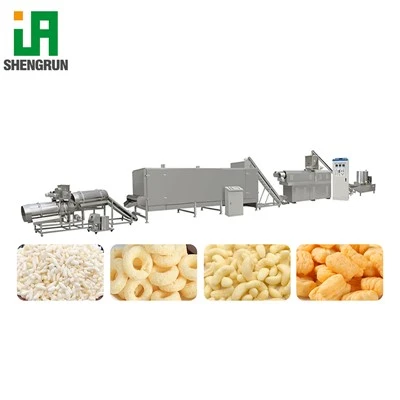
Managing the production schedule for a snack food production line is a complex but rewarding task. By understanding the demand, setting up a detailed schedule, dealing with bottlenecks, communicating effectively, having contingency plans, monitoring and adjusting the schedule, and building long – term relationships, we can ensure that our customers’ production lines run smoothly.
Fried Snacks Processing Machine If you’re in the snack food business and are looking for a reliable production line supplier, we’d love to hear from you. Whether you need help with setting up a new production line or optimizing your existing one, we have the expertise and experience to assist you. Contact us to start a discussion about your needs and how we can help manage your production schedule more effectively.
References
- Manufacturing Operations Management: Concepts, Technology, and Applications – This book provides in – depth knowledge about production scheduling and management in manufacturing environments.
- Production and Operations Management textbooks – These textbooks cover various aspects of production scheduling in different industries, including food production.
- Industry reports on snack food production – These reports offer insights into the latest trends and challenges in the snack food production industry.
Jinan Shengrun Machinery Co., Ltd.
We are one of the most professional snack food production line manufacturers and suppliers in China, featured by quality products and good price. Please rest assured to buy durable snack food production line for sale here from our factory. Contact us for more details.
Address: 1817 Rongce Center, No.3179 Qilu Avenue, Xingfu Street, Huaiyin District, Jinan City, Shandong Province
E-mail: sales@foodgm.cn
WebSite: https://www.food-gm.com/
