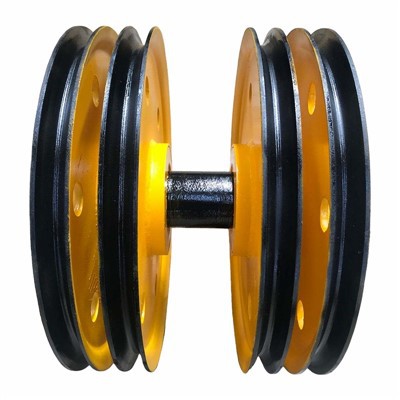
As a supplier of construction equipment nylon pulleys, I often receive inquiries from customers about the performance of our products in various environments. One question that comes up frequently is whether our nylon pulleys can be used in ultra-low-temperature environments. In this blog post, I will delve into this topic, exploring the properties of nylon, the challenges of ultra-low temperatures, and the suitability of our construction equipment nylon pulleys for such conditions. Construction Equipment Nylon Pulleys
Understanding Nylon: A Versatile Material
Nylon is a synthetic polymer known for its high strength, durability, and resistance to wear and tear. It is widely used in various industries, including construction, due to its excellent mechanical properties. Nylon pulleys are particularly popular in construction equipment because they offer several advantages over traditional metal pulleys. They are lightweight, corrosion-resistant, and have a low coefficient of friction, which reduces energy consumption and wear on the equipment.
However, like any material, nylon has its limitations. One of the key factors that can affect the performance of nylon is temperature. At extremely low temperatures, nylon can become brittle and lose its flexibility, which can lead to cracking and failure. Therefore, it is essential to understand the behavior of nylon in ultra-low-temperature environments before using it in construction equipment.
The Challenges of Ultra-Low Temperatures
Ultra-low temperatures, typically defined as temperatures below -20°C (-4°F), pose several challenges for materials and equipment. At these temperatures, the physical properties of materials can change significantly, affecting their performance and durability. Some of the key challenges of ultra-low temperatures include:
- Brittleness: As mentioned earlier, nylon can become brittle at low temperatures, making it more prone to cracking and failure. This is because the molecular structure of nylon becomes more rigid, reducing its ability to absorb energy and deform under stress.
- Reduced flexibility: Nylon’s flexibility decreases at low temperatures, which can make it difficult to install and operate pulleys. This can also lead to increased wear and tear on the equipment, as the pulleys may not be able to move smoothly.
- Thermal contraction: Like all materials, nylon contracts when exposed to low temperatures. This can cause the pulleys to shrink, which can affect their fit and performance. In extreme cases, thermal contraction can lead to the pulleys becoming loose or even falling off the equipment.
Assessing the Suitability of Nylon Pulleys in Ultra-Low-Temperature Environments
Despite the challenges posed by ultra-low temperatures, our construction equipment nylon pulleys can be used in these environments under certain conditions. To determine the suitability of our pulleys for ultra-low-temperature applications, we consider several factors, including:
- Nylon type: Different types of nylon have different properties, including their resistance to low temperatures. We use high-quality nylon materials that are specifically designed to withstand extreme temperatures. These materials have a higher impact strength and flexibility at low temperatures, reducing the risk of cracking and failure.
- Design and manufacturing: The design and manufacturing process of our pulleys also play a crucial role in their performance in ultra-low-temperature environments. We use advanced manufacturing techniques to ensure that our pulleys are precision-engineered and have a consistent quality. This helps to minimize the effects of thermal contraction and ensure a proper fit on the equipment.
- Testing and certification: Before our pulleys are released to the market, they undergo rigorous testing to ensure that they meet the highest standards of quality and performance. We test our pulleys at various temperatures, including ultra-low temperatures, to ensure that they can withstand the conditions they will encounter in the field. Our pulleys are also certified to meet international standards, providing our customers with peace of mind.
Case Studies: Real-World Applications
To illustrate the performance of our construction equipment nylon pulleys in ultra-low-temperature environments, let’s look at some real-world case studies.
- Arctic construction project: A construction company in the Arctic region was looking for a reliable pulley solution for their equipment. They needed a pulley that could withstand the extreme cold temperatures and harsh conditions of the Arctic. After evaluating several options, they chose our nylon pulleys. The pulleys were installed on their equipment and used for several months without any issues. The high-quality nylon material and precision engineering of our pulleys ensured that they could withstand the ultra-low temperatures and perform reliably in the challenging environment.
- Cold storage facility: A cold storage facility was experiencing problems with their conveyor system. The metal pulleys on the conveyor were rusting and wearing out quickly due to the low temperatures and high humidity in the facility. They decided to replace the metal pulleys with our nylon pulleys. The nylon pulleys were corrosion-resistant and had a low coefficient of friction, which reduced the energy consumption and wear on the conveyor system. The pulleys also provided a smooth and quiet operation, improving the overall efficiency of the facility.
Conclusion

In conclusion, our construction equipment nylon pulleys can be used in ultra-low-temperature environments under certain conditions. By using high-quality nylon materials, advanced manufacturing techniques, and rigorous testing, we ensure that our pulleys can withstand the challenges of extreme cold temperatures and perform reliably in the field. Our case studies demonstrate the effectiveness of our pulleys in real-world applications, providing our customers with a reliable and cost-effective solution for their construction equipment.
Mechanical Coverings If you are interested in learning more about our construction equipment nylon pulleys or have any questions about their suitability for ultra-low-temperature environments, please do not hesitate to contact us. We would be happy to discuss your specific requirements and provide you with a customized solution.
References
- ASTM International. (2021). Standard Specification for Nylon Injection Molding and Extrusion Materials. ASTM D4066-18.
- Plastics Technology. (2020). Understanding the Effects of Temperature on Nylon. Retrieved from [Website URL]
- Engineering360. (2019). Nylon: Properties, Applications, and Types. Retrieved from [Website URL]
Huai’an Dongteng New Materials Co., Ltd.
As one of the leading construction equipment nylon pulleys manufacturers and suppliers in China, we also support customized service. We warmly welcome you to buy high quality construction equipment nylon pulleys from our factory. If you have any enquiry about quotation, please feel free to email us.
Address: No. 28 Liulingtai Road, Huai’an Industrial Park, Huai’an District, Huai’an City, Jiangsu Province
E-mail: hdtnew@outlook.com
WebSite: https://www.pdcpd-nylon.com/
