What is the standard size of enamel wire? Well, as an enamel wire supplier, I’ve been asked this question a zillion times. In this blog, I’m gonna break down everything you need to know about the standard sizes of enamel wire. Enamel Wire
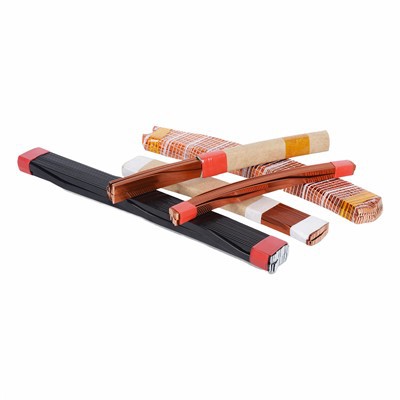
Understanding Enamel Wire Basics
Before we dive into the sizes, let’s quickly go over what enamel wire is. Enamel wire, also known as magnet wire, is simply a copper or aluminum wire coated with a very thin layer of insulation. This insulation is usually made of enamel, hence the name. It’s used in all sorts of electrical applications, like motors, transformers, and generators.
The Importance of Standard Sizes
You might be wondering, "Why are standard sizes so important?" Well, it’s all about compatibility and efficiency. When electrical equipment is designed, engineers specify certain sizes of enamel wire to ensure that the device works as intended. If you use the wrong size, it can lead to all sorts of problems, like overheating, reduced performance, or even complete failure.
Common Measurement Systems
There are a few different systems used to measure the size of enamel wire. The most common ones are the American Wire Gauge (AWG) system and the metric system.
American Wire Gauge (AWG)
The AWG system is widely used in North America. It’s a bit of a funky system because as the AWG number goes up, the actual diameter of the wire goes down. For example, a 10 AWG wire is much thicker than a 30 AWG wire. This can be a bit confusing at first, but once you get the hang of it, it’s pretty easy to work with. The AWG sizes range from 0000 (the thickest) to 40 (the thinnest).
Metric System
The metric system, on the other hand, is used in most other parts of the world. It’s a lot more straightforward because it simply measures the diameter of the wire in millimeters. For instance, you might have a wire that’s 0.5 mm in diameter or 1.2 mm in diameter.
Standard Sizes in Practice
Now, let’s talk about the standard sizes that are commonly used in different applications.
Small-Scale Electronics
In small-scale electronics, like in smartphones, tablets, and other consumer devices, very thin enamel wires are used. These are typically in the range of 30 AWG to 40 AWG, or 0.1 mm to 0.25 mm in metric. These thin wires are needed because space is limited, and you need to pack a lot of components into a small area.
Motors and Transformers
Motors and transformers usually require thicker enamel wires. For small motors, you might see wires in the range of 18 AWG to 24 AWG, or 0.5 mm to 1.0 mm in metric. For larger industrial motors and transformers, even thicker wires are used, like 10 AWG to 16 AWG, or 1.6 mm to 2.6 mm in metric. The thickness of the wire is important because it affects the amount of current that can flow through the wire without overheating.
Generators
Generators also need enamel wires that can handle high currents. The wire sizes used in generators are similar to those used in large motors and transformers. The exact size depends on the power output of the generator. Generally, for smaller generators, wires in the 14 AWG to 18 AWG range are used, while for larger industrial generators, thicker wires up to 0000 AWG might be required.
Factors Affecting Size Selection
When choosing the right size of enamel wire for your application, there are a few factors you need to consider.
Current Carrying Capacity
As I mentioned earlier, the thickness of the wire affects how much current it can carry. If you need to carry a large amount of current, you’ll need a thicker wire. You can use wire sizing charts to determine the appropriate size based on the current requirements of your application.
Resistance
The resistance of the wire is also important. Thicker wires have lower resistance, which means less energy is lost as heat. This is especially important in applications where efficiency is crucial, like in high-power motors and transformers.
Space Constraints
Sometimes, you might be limited by the space available in your device. In these cases, you’ll need to use thinner wires, even if it means sacrificing some current carrying capacity. You might also need to consider using multiple thin wires in parallel to achieve the same current carrying capacity as a single thick wire.
Our Supply of Enamel Wire Sizes
As an enamel wire supplier, I can tell you that we stock a wide range of standard sizes. Whether you need the super thin wires for small electronics or the thick ones for industrial motors and generators, we’ve got you covered. We make sure to adhere to all the necessary international standards to ensure the quality and reliability of our products.
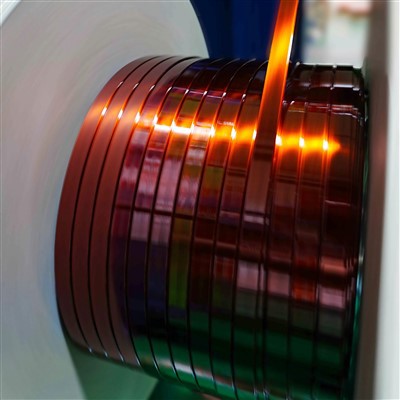
If you’re working on a project and you’re not sure what size of enamel wire you need, don’t worry! Our team of experts is always here to help. We can guide you through the selection process and make sure you get the right product for your specific application.
Conclusion
Enameled Flat Wire So, to sum it all up, the standard size of enamel wire depends on the application and the measurement system you’re using. Whether it’s the American Wire Gauge system or the metric system, there are standard sizes available for different electrical devices. As a supplier, we offer a wide variety of sizes to meet your needs. If you’re in the market for enamel wire, I encourage you to reach out to us. We can discuss your requirements in more detail and help you find the perfect solution for your project. Let’s work together to make your electrical projects a success!
References
- "Electrical Wiring Handbook" by Ronald A. Billings
- "Magnet Wire Design and Application" by the Insulated Cable Engineers Association
Tianjin Jingwei Power Technology Co., Ltd.
As one of the most professional enamel wire manufacturers and suppliers in China, we’re featured by quality products and good service. Please rest assured to buy durable enamel wire made in China here from our factory. Contact us for more details.
Address: No.1 Chuangxin Rd. Xiaozhan Industrial Park, Jinnan District, Tianjin, China
E-mail: info@jwdc.cn
WebSite: https://www.jw-dcs.com/
