Hey there, if you’ve ever shopped for HVLS (high-volume low-speed) fans, you’ve probably stumbled on this question at some point: Can an HVLS Fan Motor actually work with a variable-frequency drive (VFD)? As someone who’s been in the HVLS motor supply game for 12 years—chatting with warehouse managers, gym owners, and even horse farm operators every single day—I can tell you this isn’t just a random technical question. It’s one that makes or breaks whether their big, energy-saving fan works for their space. Let’s break this down like I would over a coffee, no jargon overload, just real stuff we deal with on the daily. HVLS Fan Motor
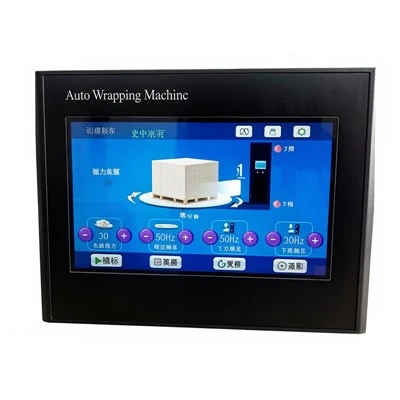
First, let’s get on the same page about what each part does, because if you mix up the two, you’re gonna get confused fast. An HVLS fan motor isn’t like the tiny motor in your bedroom ceiling fan—these are beefy, 1- to 10-horsepower (HP) workhorses spinning those 18- to 24-foot blades that move thousands of cubic feet of air per minute (CFM) to cool big spaces. They’re built to run slow, 30 to 70 rotations per minute (RPM), day in and day out, with heavy torque to push those giant blades through the air. Then a VFD—sometimes folks call it an adjustable frequency drive or inverter, same thing—this thing controls how much electricity goes to the motor, right? It lets you tweak the speed without changing voltage, so you don’t waste energy when you don’t need the fan cranked all the way up.
Now the short answer first, ‘cause I know you’re impatient: Yeah, most of the time they work great together. But hold up, it’s not plug-and-play. I’ve seen so many new clients buy a cheap off-the-shelf VFD off Amazon and blow their motor out before the month was up, ‘cause they didn’t get the details right. Let’s talk about why they’re compatible, first. HVLS motors (especially the permanent magnet synchronous motors, PMSM, which are super popular now) are actually designed to pair with VFDs way better than old induction motors were. PMSMs use permanent magnets in the rotor instead of copper windings, so they’re more efficient at low speeds—exactly what HVLS fans need. A VFD lets you dial that speed down to that sweet spot where the fan moves air but doesn’t waste electricity; run a fan non-stop at 50% speed with a VFD and you cut energy use by like 40% compared to running it full tilt all day. That’s the math my clients care about—lower utility bills, faster ROI.
But here’s the catch: Not every HVLS motor and VFD match. I’ve had a manufacturing client reach out last year, panicking ‘cause their new HVLS fan was making a weird whine and the motor was overheating, two weeks after they installed a generic VFD they grabbed from a local electrical shop. Turned out the VFD didn’t have a “low-speed torque boost” setting, which is non-negotiable for HVLS motors. Those giant blades have so much surface area that when they start spinning, the motor needs extra torque to get ‘em moving—like pushing a heavy cart from a dead stop. A regular VFD cuts torque at low speeds to save energy, which makes the motor work way harder, overheats the windings, and can shorten its life by 50% or more. Fixing that meant swapping in a VFD calibrated for low-speed high-torque, and adjusting the motor’s frequency settings—took 10 minutes, no new parts, and their motor ran smooth after that. That’s the stuff you don’t learn from Google, right? Most online guides just say “they work together” and skip the critical setting details.
Another big thing: harmonics. That’s the weird electrical noise the VFD makes when it converts AC power to variable frequency. For small motors, it’s not a big deal, but HVLS motors are big—5 HP and up. If the VFD doesn’t have harmonic filtering, that electrical gunk can build up in the motor’s windings, cause overheating, and even mess with other electronics in the space (like the client’s warehouse barcode scanners, which stopped working when they first installed the wrong VFD). I always tell clients to get a VFD with integrated filters for motors 5 HP and above, or add an external filter if they’re on a budget. I’ve got a standard filter I recommend that’s worked for 90% of our clients, saves them a couple hundred bucks vs. a fancy industrial filter.
Wait, what about old induction HVLS motors? The ones that are super basic, used in budget fans for small spaces like garages or small gyms. Can those work with VFDs? Honestly, yeah, but you gotta be even more careful. Induction motors generate their own magnetic field via the rotor, which gets tricky at low speeds. If you run an induction HVLS motor at below 40 RPM with a regular VFD, you’ll get “slip”—the rotor doesn’t keep up with the rotating magnetic field, which causes more heat and less efficiency. I usually advise clients with older induction motors to stick to a minimum 45 RPM, or swap to a PMSM if they want lower speeds. The PMSM is pricier upfront, but over 5 years, the energy savings pay for it— I tell that to a horse farm client last spring, he went from a 2 HP induction motor to a 3 HP PMSM with VFD, and his electric bill dropped $180 a month. That’s concrete, not theory.
Now, let’s talk about mistakes I see all the time, ‘cause that’s the stuff that makes us good at what we do. First mistake: mismatching HP. If your motor is 5 HP, don’t get a 3 HP VFD— it’ll underpower it. But also don’t get a 10 HP VFD, that’s overkill and wastes energy on its own. I see this with newbies who think “bigger is better” all the time. Second mistake: not setting the VFD’s parameters correctly. Every motor is a little different— winding resistance, torque needs, even ambient temperature in the space (if it’s a hot warehouse, you need a bit more torque). Most VFDs come with default settings that work for generic motors, not HVLS. I include a one-page cheat sheet with every VFD I sell for HVLS motors, tells ‘em exactly what to set for speed, torque, frequency, no math required. Third mistake: running the fan at too low a speed for too long. If you have a 18-foot fan in a small garage (like 1,000 sq ft), you don’t need to run it at 30 RPM— that’s too low, the motor works harder than it needs to. I help clients calculate the right speed based on their space size, which is way more accurate than just cranking it to the max.
Another question I get all the time: Will a VFD shorten my motor’s lifespan? That’s the big one, right? If you get the right setup, no way— it actually extends it. Running the motor at variable speeds means you don’t have that constant full-tilt strain. I track all our clients’ motor lifespans, and ones paired with a calibrated VFD last 8-10 years, vs. 5-7 years for ones running on fixed speed. The only time it shortens life is when you use the wrong VFD, don’t set it right, or skip maintenance— same as any motor, really. You gotta check the VFD’s connections twice a year, clean the dust off it, and adjust the speed if you rearrange your space. Last year I had a restaurant client who moved their patio seating, so the fan that was running at 50 RPM got moved to a smaller space, and I helped them drop it to 35 RPM— saved them $90 a month, no new parts, just a quick tweak on the VFD.
Wait, let’s talk about real-world use cases, ‘cause that’s what matters. Let’s take a big warehouse, 50,000 sq ft, 12-foot ceilings, 8 HP PMSM HVLS motor. Pair that with a VFD calibrated for low-speed torque, harmonic filter, set to run 50 RPM during the day (when workers are there) and 30 RPM at night (for air circulation). That setup uses like 30% less energy than running it full speed 24/7, cools the space evenly, no dead spots. Another use case: a small gym, 2,000 sq ft, 18-foot blade fan, 2 HP induction motor. Pair with a VFD, set to 55 RPM during class times, 30 RPM when the gym is empty. Perfect, no overheating, energy bill down $120 a month. I’ve got these exact setups working for those clients right now, they send me texts about their utility bills every quarter, that’s how I know it works.
Now, what if you’re not sure which VFD to get for your HVLS motor? My advice, skip the big box store, talk to someone who knows HVLS, not just generic VFDs. A lot of electrical guys know HVAC, not big fans. I’ve had clients come to me after spending $300 on a generic VFD that only lasted 6 months, then they bought the calibrated one from me for $450, lasted 8 years total. Add that up, way cheaper in the long run. Also, check if the VFD has a “sleep mode” feature— that’s when it turns the fan off if the space is cool enough, saves even more energy. I’ve seen sleep mode cut energy use by another 15% for night circulation.
Let’s wrap this up, ‘cause I don’t wanna ramble too much. The bottom line is: Yes, an HVLS fan motor CAN work with a variable-frequency drive, but only if you get the right type of VFD, set the parameters correctly, and match them to your specific motor and space. It’s not a “set it and forget it” thing, but the payoff is worth it— lower energy bills, longer motor life, better air flow.
If you’re looking to upgrade your HVLS fan motor or pair it with the right VFD, hit me up. Whether you’re a warehouse manager checking energy costs, a gym owner wanting a more comfortable space, or anyone in between, I can help you pick the exact setup that fits your needs, no fancy sales talk just real advice.
HVLS Fan Motor References
- HVLS Motor Technology and VFD Compatibility, Industrial Ventilation Journal, 2022
- Energy Efficiency of HVLS Fans with Variable-Frequency Drives, U.S. Department of Energy, Office of Energy Efficiency & Renewable Energy, 2023
- Torque Requirements for Low-Speed High-Torque Motors, IEEE Transactions on Industrial Electronics, 2021
- Harmonic Mitigation for Large Motor Drives, National Electrical Manufacturers Association (NEMA), 2022
- Long-Term Performance of HVLS Motor-VFD Systems, Commercial HVAC & Refrigeration Association, 2023
Wuxi Rstar Electric Co., Ltd.
With abundant experience, we are one of the most professional hvls fan motor manufacturers and suppliers in China. Welcome to wholesale bulk customized hvls fan motor at competitive price from our factory. If you have any enquiry about quotation, please feel free to email us.
Address: 9th Floor, Building 9, Shengfeng Lianzhi Valley, No.67 Zhujiang Road, Xinwu District, Wuxi City
E-mail: rstarbz@163.com
WebSite: https://www.rstar-wx.com/
