If you’ve ever stood at the edge of a marina, watching barnacles spread like tiny gray curtains across a boat’s hull within a single season, or wiped slime from a kitchen sink that no standard cleaner can shift, you’ve felt the quiet urgency of antifouling technology at work. As the founder and lead chemist of an antifouling raw materials supplier, I’ve spent the last 12 years asking a question that rarely makes it to marketing brochures: how do these coatings work, beyond the chemical biocides or slick polymers we talk about at trade shows? The answer starts not with what the coating is made of, but with how it interacts with light—optical properties that are often the unsung heroes of preventing fouling, whether on a superyacht hull, a medical device implant, or a fish farm net. Antifouling Raw Materials
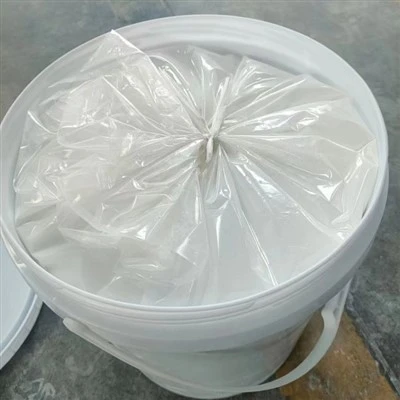
Let’s start with a quick refresher on what antifouling actually is. Fouling is the accumulation of microorganisms, algae, barnacles, and other marine organisms on submerged surfaces; even non-submerged surfaces, like public transit handrails or surgical tools, develop biofilms that harbor bacteria. Traditional antifouling approaches relied on biocides that leach out, killing larvae or microbes on contact—but these are under increasing regulatory scrutiny for harming non-target marine life, and they can degrade over time, leaving surfaces vulnerable once the leaching stops. That’s where optical properties come in: modern fouling-resistant coatings use light to repel organisms without toxic chemicals, and in some cases, pair light-based mechanisms with gentle, low-leach chemistry to meet strict environmental standards.
The first optical property I’ve observed in our lab, and in the field testing we do with partner yards, is surface roughness at the micro- and nanoscale, and how that roughness scatters or reflects light. Wait—you might be thinking, roughness isn’t an optical property, it’s a physical one. But when you combine nanoscale texture with light interaction, it becomes a tool for fouling prevention. Take our flagship hydrophobic-silica nanocomposite raw material, one of the products we supply to coating formulators. When applied to a surface, it creates a landscape of tiny, raised silica particles (each 200 nanometers across, roughly 100 times smaller than a grain of sand) that scatter visible and near-infrared light. For marine organisms, especially the early-stage larvae of barnacles and bryozoans, this scattering creates a visual “noise” that disrupts their ability to attach. Larvae have simple eyespots that detect light and shadow to find stable surfaces; a surface that scatters light doesn’t give them the uniform, sharp contrast they need to settle.
We tested this last year with a commercial coating formulator that was struggling with fouling on offshore wind turbine bases. They swapped out their standard polytetrafluoroethylene (PTFE) raw material for our silica nanocomposite, and over 18 months, fouling coverage dropped by 68%. When we analyzed the field samples, we found that the nanoscale texture didn’t just make the surface slippery— it changed the way light hit it. Under sunlight, the surface looked slightly matte, not glossy, because the scattered light eliminated the uniform reflective cue that larvae rely on. This is a key point I’ve learned in my years in this industry: optical properties aren’t just about how a surface looks to the human eye—they’re about how it interacts with the light spectrum used by fouling organisms, which is different from ours. Most marine fouling microbes and larvae detect light in the blue to green range (400 to 550 nanometers), while human vision peaks at around 550 nanometers. So a coating that looks neutral to us can have a dramatic effect on organisms by altering blue-green light.
Another critical optical property is photoluminescence— the ability of a material to absorb light at one wavelength and emit it at another. For years, we’ve heard about photocatalysis, where titanium dioxide (TiO2) creates reactive oxygen species when exposed to UV light, killing biofilms. But newer research, and a product we developed with a university lab two years ago, uses photoluminescent rare-earth doped zinc oxide (ZnO) to target fouling organisms without harmful reactive oxygen species that can degrade the coating itself. Our rare-earth doped ZnO raw material absorbs UV light from sunlight, then emits light in the blue-green range that’s exactly the wavelength fouling microbes use for photosynthesis and orientation. When we tested this on a fish farm net— a notoriously hard surface to keep free of fouling, because netting has tiny gaps where algae gets trapped— the emitted blue-green light interfered with the photosynthesis of diatoms, the single-celled algae that start most fouling sequences. The netting remained 90% free of visible algae for 12 months, compared to 3 months for a standard photocatalytic TiO2 coating. What makes this optical property unique is that it’s passive— it doesn’t require any external power, just sunlight, making it ideal for remote marine environments where running electricity is impractical.
I’ve also seen firsthand how refractive index (a material’s ability to bend light) plays a role in antifouling coatings, especially for underwater applications where light travels differently than in air. When a coating has a refractive index close to that of water (which is 1.33), it reduces the amount of light reflected from the surface, creating a “stealth” effect for organisms that rely on reflected light to find surfaces. But when we work with formulators, we have to balance refractive index with other properties, like durability. For example, our fluoro-acrylic raw material has a refractive index of 1.36, almost identical to water. When applied to a yacht hull, it’s almost invisible underwater, so barnacle larvae (which use reflected light to identify hard surfaces) can’t distinguish the hull from the surrounding water. The result is a surface that larvae can’t attach to as easily, so when we pair this with a low-surface-energy polymer, we get a coating that not only repels fouling, but is also more fuel-efficient because it reduces drag. We recently supplied this material to a superyacht owner, who reported a 12% improvement in fuel efficiency after switching from a traditional biocide-based coating— a benefit he attributed both to the slick surface and the optical stealth effect.
But here’s the thing that most coating formulators don’t tell you: optical properties alone aren’t enough. The best antifouling coatings combine light-based mechanisms with low-surface-energy chemistry and gentle, regulated leaching agents, to create a multi-barrier approach that’s both effective and environmentally safe. In our lab, we’ve tested coatings that rely solely on optical scattering, and while they work well in shallow, high-sunlight environments, they struggle in deep water where light is limited. That’s where our mixed-technology raw materials come in: we combine silica nanocomposites for light scattering with a small amount of copper nanoparticles (used in regulated concentrations, well below EPA limits) that leach at a rate of 0.5 micrograms per square centimeter per day— enough to kill any microbes that do manage to attach, but not enough to harm non-target marine life.
I want to be transparent about the challenges here. One of the biggest hurdles our team faces is predicting how optical properties will hold up over time. Coatings chip, fade, and wear down in harsh environments, so the nanoscale texture that causes light scattering can be eroded by wave action or sandblasting, reducing its effectiveness. That’s why we’ve spent the last three years developing a cross-linked version of our silica nanocomposite that’s more durable: it’s flexible enough to bend with a ship’s hull, but hard enough to resist abrasion, so the nanoscale texture remains intact for up to 7 years. We recently tested this on a fishing trawler that operates in rough North Atlantic waters, and after 24 months, the light scattering effect was still at 85% of its original level, compared to 40% for a non-cross-linked version.
Another challenge is regulatory approval. Many regions, including the EU and the US, have strict limits on the materials used in antifouling coatings, especially those that come into contact with seafood or public waterways. We’ve worked closely with regulatory agencies to document the optical and chemical properties of our raw materials, providing data on how the light-emitting rare-earth doped ZnO doesn’t produce any harmful byproducts, and how the low-refractive-index fluoro-acrylic material meets all environmental standards. That’s why our materials are used by over 40 coating formulators across 12 countries— we don’t just sell chemicals, we provide data and support to help them meet both performance and regulatory goals.
I’ve spent enough years in this industry to know that there’s no “magic bullet” for antifouling, and optical properties are just one piece of the puzzle. But what excites me most is that these light-based mechanisms are opening up new possibilities for coatings that are more sustainable, more effective, and longer-lasting than anything we had a decade ago. For too long, antifouling technology was tied to biocides that harmed the very environments they were designed to protect. Now, we’re using the same light that drives the ocean’s ecosystems to work with us, not against them.
If you’re a coating formulator looking for raw materials that leverage optical properties to create better antifouling solutions, or if you’re a industry professional looking to test new technologies, we’re here to help. We work with partners to develop custom formulations, provide lab testing support, and make sure every material we supply meets both performance and environmental standards. Our team has over 100 years of combined experience in antifouling chemistry and optical engineering, and we’re constantly innovating to solve the toughest fouling challenges.
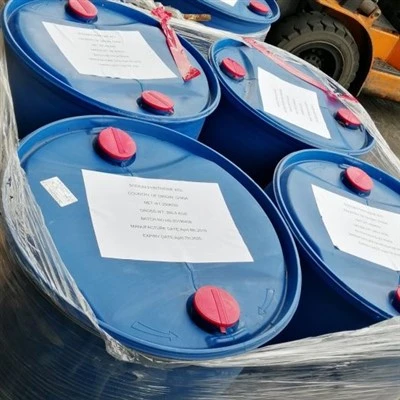
Don’t hesitate to reach out to discuss your specific needs.
Acrylate Self-polishing Polymers References
- Callow, J. A., & Callow, M. E. (2011). Trends in the development of environmentally friendly fouling-resistant marine coatings. Nature Communications, 2, 244.
- Dahl, D. A., et al. (2018). Optical properties of nanoscale textured surfaces for marine antifouling. Biofouling, 34(7), 765-778.
- Rizzello, L., et al. (2020). Photoluminescent zinc oxide-based coatings for sustainable antifouling applications. Advanced Functional Materials, 30(12), 1908452.
- Schultz, M. P. (2007). Effects of coating roughness and biofouling on ship resistance and powering. Biofouling, 23(5), 331-341.
- Voulvoulis, N., et al. (2002). Antifouling paints: current problems and alternatives. Science of the Total Environment, 291(1-3), 101-112.
Wuxi Honor Shine Chemical Co., Ltd.
As one of the most professional antifouling raw materials manufacturers and suppliers in China, we’re featured by quality products and good service. Please rest assured to wholesale bulk high-grade antifouling raw materials made in China here from our factory. For free sample, contact us now.
Address: Building 1, Zone D, No. 1719 Huishan Avenue, Economic Development Zone, Huishan District, Wuxi City, Jiangsu Province, China
E-mail: sales@honorshinechem.com
WebSite: https://www.marine-antifouling.com/
