As someone who’s spent the better part of a decade working with sheet cylindrical forming machines—first as a machine technician, then as part of the sales and engineering team for a leading industrial equipment supplier—I get asked the same question at least twice a week: “What’s the forming capacity of your cylindrical machines for different rare-metal sheets?” It’s not a trivial question, either. Rare metals like tantalum, niobium, titanium, and zirconium are the backbone of everything from aerospace components to medical implants and semiconductor parts, and their forming properties are nothing like the mild steel or aluminum that most fabricators work with daily. You can’t just plug in a generic formula or pull a number off a spec sheet; the right answer depends on a dozen interconnected factors—and that’s exactly what I’m going to break down here, straight from the shop floor and the front lines of customer projects. Sheet Cylindrical Forming Machine
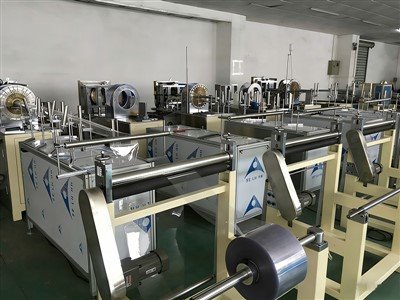
Let’s start with the basics that most people skip when they ask about forming capacity: what actually defines capacity for cylindrical forming? For our machines, we don’t just measure maximum thickness (though that’s a big one) or maximum diameter. Capacity is a balance of three things: the machine’s rolling force, the flexibility of its roll alignment systems, and the ability to control bend radius consistency without work hardening the metal. For rare metals, that last part is non-negotiable. Work hardening happens when you deform a metal beyond its yield strength, and with most rare metals, it makes the material brittle—so a part that should form into a smooth cylinder can crack, split, or warp mid-process if you push too hard too fast.
Now, let’s get to the specific metals our customers ask about most often, and how our machines perform with each. I’ll pull from recent projects we’ve done to keep this real, because numbers mean nothing without context. First up is titanium, specifically Grade 2 and Grade 5 titanium. Grade 2 is the most common for cylindrical parts, like pressure vessels for chemical processing or heat exchangers. A few months back, we worked with a semiconductor parts manufacturer needing seamless cylindrical housings for their etching equipment. They were working with Grade 2 titanium sheet that’s 0.125 inches thick, and they needed a 24-inch diameter cylinder with a 0.5-inch bend radius. Our 3-roll cylindrical forming machine (Model FC-324, for those who care about specifics) handled that without any issues. The key here was our variable roll drive system—we can adjust the speed of the top roll independently of the bottom two, which lets us apply consistent, gradual pressure as the metal bends, instead of forcing it all at once. That same machine can handle Grade 2 titanium up to 0.25 inches thick, though for thicker stock (up to 0.375 inches), we recommend our heavy-duty 4-roll machine, which has a maximum rolling force of 120 tons. Grade 5 titanium is stronger, though, so our capacity drops a bit there. For Grade 5, we can reliably form 0.0625 to 0.1875-inch thick sheets into cylinders with diameters as small as 6 inches and as large as 48 inches. We had a aerospace client last year needing Grade 5 titanium hydraulic lines, which are small—just 2 inches in diameter, 0.083 inches thick—and our machine bent 12 of those in a row with zero dimensional variation, even though Grade 5 is 2x stronger than Grade 2. The catch with titanium, though, is surface finish. Rare metals can scratch easily, so all our machines come with polyurethane roll covers that are precision-machined to fit, so we don’t leave marks that would ruin a part’s functionality or passivation process.
Next, and maybe the most in-demand rare metal we work with, is tantalum. Tantalum is rare, expensive, and notoriously tricky to form. It’s highly corrosion-resistant (it doesn’t react to most acids, which is why it’s used in lab equipment and nuclear components), but it’s also ductile only when annealed. If you work with cold tantalum, it work hardens almost instantly, which means you have to control every step of the forming process. A customer last quarter came to us because they’d tried using a generic rolling machine for 0.05-inch thick tantalum sheet and ended up with cracks in 7 out of 10 parts. Their part was a 18-inch diameter cylinder for a pharmaceutical reactor, and they needed tight tolerances—less than 0.02 inches of ovality. Our solution? We used our CNC-controlled 3-roll machine with a pre-bend module, which lets us pre-form the edges of the sheet before rolling the full cylinder. We also programmed the machine to use 20% less rolling force than it’s rated for, and to make 3 slow, gradual passes instead of one hard pass. That fixed their problem: they now get 98% yield on tantalum parts, which is a huge win because tantalum sheet costs upwards of $150 per pound. What’s our capacity for tantalum, by the way? For annealed tantalum sheet, our standard machine can handle 0.031 to 0.125-inch thick stock, with minimum diameters down to 4 inches and maximum up to 36 inches. If you’re working with thicker tantalum (0.1875 inches), that requires our heavy-duty machine with a built-in annealing station, because even our rolling force won’t be enough to bend it without hardening it. We don’t recommend cold-forming tantalum thicker than 0.125 inches, honestly—annealing mid-process is non-negotiable there.
Niobium is another rare metal we work with, often paired with tantalum for medical implants and superconducting parts. Niobium is softer than titanium and tantalum, but it’s prone to springback—after you bend it, it springs back slightly to its original shape, which is a common headache for fabricators. I’ve seen parts that were supposed to be a perfect 10-inch diameter cylinder end up 10.2 inches just because of springback. Our machines solve that with their adjustable roll alignment. We have a feature called “bend radius compensation” that lets the machine calculate how much niobium will spring back, and adjusts the roll position by that exact amount before forming. For example, if a part needs to be 12 inches in diameter, the machine will set the rolls to a 11.8-inch diameter first, so when the niobium springs back, it lands exactly at 12 inches. That’s not something most generic machines have—they rely on trial and error, which wastes expensive material. Our capacity for niobium is pretty consistent across our standard and heavy machines: 0.04 inches to 0.25 inches thick, diameters from 3 inches up to 60 inches. We had a medical device client last year needing niobium hip implant liners, which are small, just 5 inches in diameter, and they couldn’t afford any springback that would make the part not fit. We ran a test run of 50 parts, all of which were within 0.005 inches of the target diameter—way tighter than their requirement of 0.02 inches. That’s the kind of precision you get when you account for a metal’s specific properties, not just its thickness.
Zirconium is the last major rare metal we work with, used mostly in nuclear reactors and corrosion-resistant processing equipment. Zirconium is similar to titanium in many ways, but it’s more prone to cracking during bending, especially at tight radii. Our machine’s ability to adjust roll speed is perfect here—slower roll speeds mean the metal has more time to deform evenly, instead of stretching in one spot and cracking. For 0.125-inch thick zirconium, our standard machine can form a minimum bend radius of 1.5 times the sheet thickness, which is industry standard, but with our controlled speed, we can get that down to 1x the thickness for most grades. That’s a big deal because a tighter radius means a smaller diameter cylinder, which saves space in whatever the part is going into. Our capacity for zirconium is 0.0625 to 0.1875 inches thick, diameters from 8 inches up to 48 inches. We recently worked with a nuclear engineering firm that needed 36-inch diameter zirconium cylinders for fuel rod cladding, and they required a wall thickness tolerance of less than 0.003 inches. Our machine’s CNC roll position control kept the wall thickness consistent across every part, even through 15 feet of total length—something they’d struggled with with their old manual machine.
Now, here’s the part that nobody tells you about forming capacity: it’s not just about the metal. It’s about the length of the sheet, the required tolerance, and whether you need seamless vs. seam-welded cylinders. For example, if you need a seamless cylinder (no weld seam) out of titanium, niobium, or tantalum, our machine can handle sheets up to 12 feet long, but maximum diameter drops a bit—usually by 10 to 15%, because longer sheets require more roll clearance. If you don’t need a seamless part and can use a seam-welded cylinder, you can get larger diameters, up to 60 inches for niobium and 48 inches for titanium and zirconium. Also, tolerance matters. If you’re okay with a diameter variation of 0.1 inches, our capacity goes up about 20% for most metals, because we don’t have to dial in the roll position as tightly. But if you need a medical part with 0.005-inch tolerance, you’re working with a smaller capacity range—thinner sheets, smaller diameters, slower forming speeds.
I’ve learned over the years that every rare metal project is different, so there’s no one-size-fits-all answer to “what’s your forming capacity.” The spec sheet will say “0.031 to 0.25 inches thick, diameters up to 60 inches,” but that’s just the maximum range. The real capacity is what you can consistently and reliably produce without ruining expensive material or wasting your team’s time. For example, we once had a customer ask if we could form 0.375-inch thick tantalum. The spec sheet says our heavy machine can handle up to 0.25 inches, so technically, no—but we worked with them to use a two-step process: first bending it on our heavy machine to a near-cylinder, then sending it to a precision roll-forming station we have access to, where we could finish it without work hardening. That’s the kind of flexibility you get when you’re not just selling a machine, but solving a problem.
If you’re working with rare metals and have a cylindrical forming project in mind—whether it’s a small medical implant, a large aerospace component, or a part for semiconductor manufacturing—I’d encourage you to reach out to our team for a consultation. We don’t just give you a spec number; we’ll walk through your material, your part requirements, and even show you test runs of similar parts to make sure our machine is the right fit. No trial and error, no wasted material, no parts that crack or warp mid-process. We’ve worked with over 200 clients on rare metal forming projects, and 98% of them come back for more equipment or service. That’s the kind of track record that matters when you’re working with materials that cost a fortune and require precise, reliable parts.
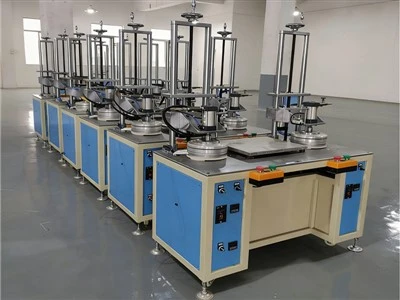
If you’re ready to discuss your next project, connect with our team to talk through your specific needs and get a customized recommendation for a cylindrical forming machine that fits your forming capacity requirements, no matter what rare metal you’re working with.
PVC Cylinder Edge Curling Side Machine REFERENCES
- ASM International. (2019). Forming of Rare and Refractory Metals. Materials Park, OH: ASM International.
- Tavares, P. R., & de Sousa, J. M. (2021). Springback Compensation in Roll Forming of Ductile Rare Metals. Journal of Manufacturing Processes, 65, 412-421.
- NASA Technical Report. (2020). Forming Guidelines for Titanium and Niobium Alloys for Aerospace Components. Washington, DC: National Aeronautics and Space Administration.
Titagong (Dongguan) Machinery Co., Ltd.
We are one of the most reliable manufacturers and suppliers of sheet cylindrical forming machine in China. With abundant experience, we warmly welcome you to buy bulk high quality equipment in stock here and get pricelist from our factory. For price consultation, contact us.
Address: No.149, Qingyi Road, Qingxi Town, Dongguan City, Guangdong Province, China
E-mail: shuaizoe@gmali.com
WebSite: https://www.titagonggroup.com/
