What I Wish Every New Trucker Knew About How That Big Trailer Actually Hooks Up To The Tractor
Been in the semi-trailer game for 12 years now—selling, fixing, and troubleshooting everything from flatbeds to reefers—so I’ve seen my fair share of new drivers fumble the coupling process like they’re learning to drive a stick for the first time. It’s not rocket science, but skipping a single step here can turn a routine stop into a 2-hour wait, or way worse. Let’s break this down like I’d explain it to a brand-new hire, no fancy jargon, no corporate fluff. Semi-Trailer
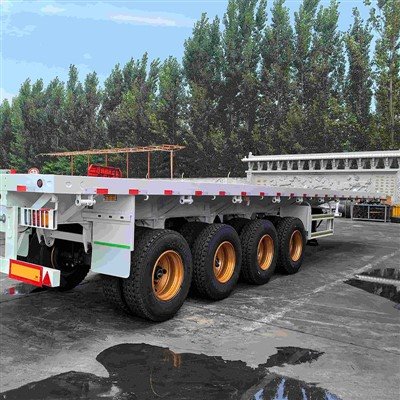
First off, let’s get the main players straight because half the people I talk to mix up the parts before they even start. The big cab-and-engine thing you drive is the tractor, right? The back part you drop and hook to? That’s the semi-trailer—though around here we just call it “the trailer” 9 times out of 10. The key connection point between them? That big metal knob sticking out of the back of the tractor, called the fifth wheel. Yeah, fifth wheel, don’t ask why they named it that—no one around here’s got a straight answer.
Now, before you even line up, there’s a couple non-negotiable checks that’ll save you so much headache. First, make sure the trailer is parked level. I’ve seen drivers pull up to a trailer that’s leaning 3 inches to one side and wonder why the kingpin won’t lock. The kingpin is that 2-inch steel bolt sticking out of the front of every semi-trailer—super heavy, super strong, made to hold the whole rig together. If the trailer’s nose is too high or too low, the kingpin can’t slide into the fifth wheel’s jaws properly.
Then, always, always check the trailer brakes. You’d be shocked how many new drivers yank the glad hands (those rubber air hoses that connect the tractor’s air system to the trailer’s brakes) before making sure the trailer is secured, only to watch the trailer roll forward when they disconnect. We sell so many replacement landing gear cranks a month from that mistake, I should just stock them in the office.
Okay, let’s get to the actual coupling step. Once you’ve backed up the tractor slowly—like, walking pace slow, stop when the fifth wheel is 6 inches away from the kingpin. Now, get out, go check the fifth wheel. Look at that little metal lever under the fifth wheel, right? That’s the lock. You need to make sure it’s in the “open” position before you back up. If that lever’s stuck closed, the kingpin won’t slot in, period. Pro tip: if you’re having a hard time finding it, shine your phone light under the fifth wheel, it’s right there, easy to miss in the dark.
Also, while you’re out there, double-check the trailer’s nose height. If it’s too low, you might bend the fifth wheel or the kingpin when you back into it. If it’s too high, the landing gear (those little crank legs under the trailer) will be holding all the weight and pull right out when you drive off. Easy fix: crank the landing gear up or down a few notches until the front of the trailer lines up just right with the fifth wheel. I once had a driver crank a trailer so high, it scraped the underside of the tractor’s cab when he backed in—$1,200 repair bill, all because he skipped that quick check.
Once you’ve got the height right, lock the fifth wheel lever open, get back in the tractor. Now, here’s the part everyone messes up: back up SLOWLY, keeping your eye on the fifth wheel. Don’t just blast forward like you’re parking at a mall. Stop when you hear that loud, distinct “CLANK” sound. That’s the kingpin sliding all the way into the fifth wheel’s jaws. That’s the sound you want to hear, no exceptions. If you don’t hear it, get back out and check—don’t just assume it’s locked.
Wait, hold up. You’re not done yet. You gotta test it before you disconnect the trailer. Here’s how: put the tractor in first gear, gently pull forward like you’re trying to drive away. If the trailer stays put, great. If it lurches or pulls away with you? The fifth wheel didn’t lock. That’s a big problem, fix it before you drive anywhere. I’ve seen guys ignore that test and get on the highway, only to have the trailer come loose at 65 mph. Not fun, trust me.
Now that the fifth wheel is locked, you need to connect the air lines. Those two rubber hoses with the red and blue caps on the ends—glad hands, like I said earlier. The blue one is for the service brakes, the red one is for the emergency brakes. Match the colors! I’ve seen drivers hook blue to red so many times, the trailer brakes locked up on a steep hill and they wrapped around a guardrail. No exaggeration, that’s a story I tell at every new driver training session. Push the glad hands together firmly until they click, no loose connections—wiggling them a little after you connect is a good check.
Next, connect the electrical cable. That’s the curly black cord that powers the trailer’s lights, turn signals, and brakes. Push the plug into the port on the back of the tractor, twist it until it locks in. If you skip this, your brake lights won’t work, your turn signals won’t, and the DOT guys will pull you over faster than you can say “log book.” We get so many calls from drivers who forgot that step and got a $500 ticket, it’s not even funny.
Wait, but what if you’re swapping a trailer, dropping one and hooking up another? The disconnect process is just as important, I can’t tell you how many accidents happen because of sloppy hookups when switching trailers. When you’re ready to disconnect, first make sure the trailer is parked on level ground, set the trailer brakes (you can test that by gently pulling forward to make sure it doesn’t move), then pull the air line knob on the tractor to release the trailer brakes. Crank the landing gear down until it’s holding the full weight of the trailer—you don’t want it dropping when you disconnect. Then push the fifth wheel lever to open it, make sure there’s no slack, and pull forward slowly. That’s it.
Now, let’s talk about some common mistakes we see, because those are the things that cost you time and money. Number one: not testing the fifth wheel lock. Even if you heard the clank, you have to do that pull forward test. I had a guy last month who thought the clank was enough, got on I-95, and the trailer came loose. Totaled his trailer, the tractor, and a parked van—$100k in damages. All because he skipped one step. Number two: mismatched glad hands. Blue to blue, red to red, that’s non-negotiable. Number three: not cranking the landing gear all the way up after hookup. If you leave them down a few inches, they’ll drag on the road, blow out, and cause a blowout that can flip the whole rig.
As a semi-trailer supplier, I see first-hand how many issues come down to people not understanding the connection process. Most new drivers don’t get hands-on training on this anymore—they just watch a video once and hit the road. That’s why we always include a quick step-by-step card with every trailer we sell, plus a free 15-minute video link (don’t worry, it’s not 45 minutes of corporate fluff, it’s actual footage of the coupling process, no B.S.) for every new customer.
If you’re in the market for a trailer—whether it’s a dry van, reefer, flatbed, or something custom built for your specific route—we’ve got hundreds in stock, all inspected and ready to go. We don’t do pre-built one-size-fits-all garbage; we work with fleets and owner-operators to make sure every trailer is set up for how you use it, whether you’re hauling groceries cross-country or construction materials across the state.
We also offer post-purchase support, so if you’re ever confused about hooking up a new trailer, or have a question about maintenance on your fifth wheel or landing gear, our team’s on call 24/7. No big call centers, no waiting 3 hours to talk to someone who doesn’t know the difference between a kingpin and a landing gear. We’re the guys who work alongside drivers every day, so we get it.
If you’re ready to talk about your next trailer, or have questions about the coupling process, we’re here to help. Don’t take our word for it, though—ask any of the 500+ fleets and owner-operators we’ve worked with over the last decade. They’ll tell you we’re not just a supplier, we’re part of the team.
Construction Machinery References:
Commercial Truck Safety Alliance. Coupling and Uncoupling Procedures for Heavy-Duty Tractors and Trailers. 2022.
North American Trailer Manufacturers Association. Semi-Trailer Maintenance and Operation Guide. 2021.
Federal Motor Carrier Safety Administration. Inspection and Maintenance Standards for Commercial Motor Vehicles. 2023.
Jining Dafu Machinery Sales Co., Ltd.
As one of the most professional semi-trailer suppliers in China, we’re featured by quality products and low price. Please rest assured to wholesale bulk cheap semi-trailer from our factory. We also accept customized orders.
Address: Room 1-115, Building 7, Luxinan Auto Parts City, Qiantongdian Village, Quanpu Town, Liangshan County, Jining City, Shandong Province
E-mail: jiningdafu@163.com
WebSite: https://www.dafumachinery.com/
