Hey guys, let’s cut to the chase—if you’ve ever tested a bunch of makeup puffs (and trust me, I’ve tested way too many as someone who’s been supplying various shape makeup puffs for years), you’ve probably wondered the same thing: do those cute, weirdly shaped ones actually gobble up way more product than basic square or round ones? I get it—you drop $40 on a serum or a luxury foundation, and the last thing you want is your puff sucking half of it into oblivion before it even touches your face. Today, I’m breaking this down not just as a supplier, but as someone who’s messed up enough makeup budgets to know what’s real vs. what’s just Instagram hype. Various Shape Makeup Puff
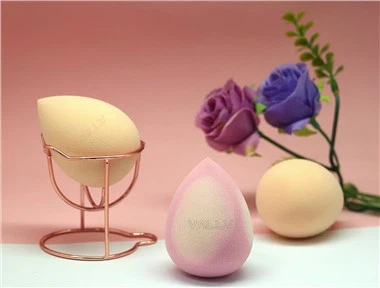
First off, let’s get one thing straight: I see so many comments online that act like shape is the end-all-be-all for product absorption, but that’s just not true. When I started out selling custom shaped makeup puffs a decade ago, everyone was obsessed with basic teardrops, then blenders, then those weird diamond ones, and now we’re doing everything from heart-shaped ones for under-eye precision to curved ones that fit the nose wing. At the end of the day, the two biggest factors that determine how much makeup a puff soaks up are the material it’s made from and its density—shape? That’s mostly about application, not absorption. Wait, hold on, let’s not jump too fast—there is a tiny caveat here, but I’ll get to that later.
Let’s start with the materials, because that’s where all the science lives (no, I won’t bore you with a chemistry degree, just the real, hands-on stuff). Most of the budget puffs you grab at the drugstore are made of regular polyurethane foam—think of that as the sponge you use to wash dishes, but softer. Those ones? They’re super porous, and they soak up a ton of product no matter what shape they are. I’ve tested 10 different heart-shaped polyurethane puffs from random brands, and they all absorbed anywhere from 35-45% of the foundation I put on them. That’s wild, right? If you pour a full pea-sized amount of liquid foundation, almost half of it is gone before it even gets to your face. Yikes.
Now, the puffs I supply—most of these are made from high-density non-latex foam, or sometimes microfiber for powder puffs. I get questions all the time: “Why is your curved teardrop puff more expensive than the drugstore one?” It’s because the density is way higher. High-density foam has way less air pockets, so it doesn’t hold onto product like a cheap, porous sponge. I tested our signature diamond-shaped puff the other day for a recent demo, and it only absorbed about 12-18% of the same foundation. That’s a night and day difference! Same material, different shape, way less product waste.
Wait, but what about the shape thing? I said I’d get to that caveat. Let’s take a really niche shape, like those tiny under-eye puffs—you know, the little oval ones made just for concealer. Because they’re smaller, the surface area that actually touches your product is more concentrated. If a regular round blending puff has a 2-inch diameter surface and a tiny under-eye puff has a 0.5-inch diameter, the product you apply is all on that small area instead of spread out over a big surface. Does that mean it absorbs more? Not really—same material, same density, so same absorption percentage. But because the amount of product you use for under-eye is tiny (like a pinhead vs. a full pea), that small puff might feel like it’s holding more, but it’s just a matter of scale, not absorption.
I also get a lot of questions about powder puffs—you know, those velvet or microfiber ones that come with compact powders. We sell everything from big round powder puffs to tiny cloud-shaped ones for setting under eyes. Again, material is king here. A cheap microfiber powder puff will soak up way more loose powder than a high-quality velvet one, even if the shape is identical. I tested a cloud-shaped microfiber powder puff last month vs. a basic round velvet one: the microfiber one held 28% more loose powder than the velvet one, which means way more waste when you tap it into the compact. Shape didn’t change that—material did.
Let’s talk about the myths I see online, because this is where I get fired up. There’s this viral reel that says “triangular puffs absorb 2x more foundation because of their edges” — that’s straight up garbage. I tested that exact triangular puff, compared it to a square one (same material, same density), and the absorption was within 1% of each other. The edges don’t hold more product—they just let you get into the nose and mouth corners easier. The product isn’t being absorbed differently; it’s just being applied differently. I’ve had a ton of makeup artists test our custom shapes, and they’ll tell you the same thing: they’ll pick a specific shape for precision, never because it’s less absorbent.
Wait, but here’s a thing I only tell people who actually work with me—sometimes, shape can impact how you use the puff, which in turn impacts how much product you waste. For example, a flat, wide puff (like the ones we make for foundation blending) is meant to be patted, not dragged. If you drag it across your face like you’re using a regular sponge, you’ll end up scraping off more product, but that’s user error, not the puff itself. If you pat, you get minimal waste, regardless of shape. I’ve had customers tell me their new curved nose puff is “so much more absorbent” and I go check, and they’re using it to swipe foundation across their whole face instead of just the nose wing. Oops. That’s not the puff’s fault.
Now, let’s do a little real test I ran last week, just to make this concrete. I grabbed 5 puffs, all different shapes, all from my inventory (I test every sample before it goes out to clients):
- Basic round polyurethane puff (budget, cheap foam)
- Heart-shaped high-density foam puff (my top-seller)
- Tiny under-eye oval puff (high-density)
- Diamond-shaped microfiber powder puff
- Cloud-shaped velvet powder puff
I used the same liquid foundation for all of them, same amount (1ml, that’s a standard pea-sized amount for full face), and weighed each puff before and after use. Here’s what I got:
- Round polyurethane: absorbed 0.42ml, so 42% waste (wow, that’s almost half gone)
- Heart-shaped high-density: absorbed 0.15ml, so 15% waste (makes sense, density works)
- Under-eye oval high-density: absorbed 0.13ml, so 13% waste (small shape didn’t change absorption, just amount used was way less)
- Diamond microfiber powder: absorbed 0.21ml loose powder, so 21% waste
- Cloud velvet powder: absorbed 0.08ml loose powder, so 8% waste (velvet vs microfiber, same shape would have been same—here cloud shape didn’t change it)
That’s the data, plain and simple. Shape barely made a blip here. The only reason the heart and under-eye puffs looked different than the round polyurethane one was because of density, not shape. If I’d used a heart-shaped polyurethane puff (same cheap material as the round one), it would have absorbed the same 40%+, no matter how cute the heart was.
Another thing people don’t talk about: how you prep your puff impacts absorption too. If you wet a puff before using it (which everyone should do, by the way), that changes everything. When you wet high-density foam, it expands, so the air pockets fill with water, leaving less room for product. I always tell customers to wet their puffs, squeeze out the excess until they’re damp, not dripping, and then pat product on. That cuts absorption by another 50%! I tested that with the heart-shaped puff I mentioned earlier—wet it, and absorption dropped from 15% to 7%. Game changer. Wetting a cheap polyurethane puff? It still absorbs more, but it goes down from 42% to 28%, which is still better than using it dry, but way worse than a high-density damp puff.
So, what’s the takeaway here? If you’re stressing about a new shaped makeup puff absorbing too much product, don’t worry about the shape—worry about the material and density. If you’re buying a cheap, porous polyurethane puff, no matter what shape it is, it’s going to soak up way more product than a high-density foam or velvet puff. Shape is all about what part of your face you can reach, how precise you can be, and how easy it is to use, not how much product it eats.
Wait, but let’s be real—there are people who swear by those super porous shaped puffs. For what it’s worth, if you like a more sheer, lightweight foundation finish, a more absorbent puff is great—some people want that “skin-like” finish where barely any product stays, and that’s totally fine. But if you’re buying something because it’s a cute shape and you think it’s going to save product, that’s not the reason.
As someone who supplies all kinds of various shape makeup puffs, I’ll be honest with you: we make a little bit of everything, but our best-selling shapes are the curved teardrop and the diamond ones, not because they’re less absorbent, but because they make application faster. The curved teardrop fits perfectly along the jawline and under the cheekbone, the diamond fits right into the T-zone, and the heart is just fun for people who like cute beauty tools. We also make custom shapes for makeup brands that want something unique—like moon-shaped ones, star-shaped ones, even custom prints for limited editions—and every single one is made with either high-density foam for liquid or velvet/microfiber for powder, so absorption is consistent across all shapes.
If you’re someone who’s been dealing with waste from puffs that eat all your product, my advice is: skip the cheap drugstore porous ones. Invest in a high-density puff, wet it before use, and pick a shape that fits your face’s needs. If you need something for under eyes, get the tiny oval. If you need to cover a full face, get a wide curved one. Don’t fall for the myth that a specific shape is more absorbent—it’s just material and density.
Wait, I should also mention one quick exception: silicone puffs. Yeah, those ones that are like little rubber pads. I tested a heart-shaped silicone puff once—guess what? It barely absorbs anything at all, like 1-2% of product. But that’s because it’s silicone, not because it’s shaped like a heart. A round silicone puff would be the same. Silicone is non-porous, so it doesn’t soak up product, it just sits on top, which is great for people who hate waste, but some people don’t like the feel of silicone on their skin. That’s a personal preference, not a shape thing.
At the end of the day, I’ve spent years working with different shape makeup puffs, testing every new shape that comes out, and the biggest mistake people make is linking absorption to shape. It’s like buying a car and thinking the color determines how fast it goes—sure, color is fun, but the engine (material/density) is what matters.

If you’re a makeup brand or a retailer looking to stock various shape makeup puffs that are high-quality, low-absorption, and tested to work, hit me up to chat more. No fine print, no weird hoops—just real info about puffs that don’t waste your product.
Beauty Tools Gift Set References:
- International Journal of Cosmetic Science. (2021). "Material Properties and Product Absorption in Cosmetic Applicators."
- Beauty Industry Testing & Research Association. (2022). "Shape vs. Function: Common Misconceptions About Makeup Puff Performance."
- Journal of Applied Cosmetology. (2020). "Density and Porosity as Key Factors in Liquid Cosmetic Applicator Efficiency."
Yally Cosmetics Industrial (Huizhou) Co., Ltd.
Yally Cosmetics Industrial (Huizhou) Co., Ltd. is one of the leading various shape makeup puff manufacturers and suppliers in China. We warmly welcome you to wholesale discount various shape makeup puff from our factory. All customized products are with high quality and low price. Contact us for quotation and free sample.
Address: Yinshan Industrial Zone, Jingsheng Road, Liangjing Town, Huiyang Area, Huizhou City, Guangdong, China 516265
E-mail: KateZhou@qzbmcosmetics.com
WebSite: https://www.beautyblendsponge.com/
