Hey folks, if you’ve ever worked with steel plate induction heating lines, you’ve probably caught yourself side-eyeing the EMF meter every now and then—rightfully so. As a guy who’s been in the induction heating game for 12 years now, running a line that ships steel lines all over the country, I get it. Your first question isn’t even “does it heat the steel right?” It’s “am I going to stand too close and fry my phone, or worse, my health?” Let me break this down straight, no corporate jargon, no fancy buzzwords. Just the actual EMF levels from a steel plate induction heating production line, straight from the supplier’s perspective. Steel Plate Induction Heating Production Line

First off, let’s get one thing straight: induction heating isn’t some witchcraft. It’s basic physics. When you run alternating current through a coil, it creates an alternating magnetic field, and that field induces eddy currents in the steel plate. Those currents create resistance, and boom—heat, no open flames, no gas fumes, just controlled energy. The EMF we’re talking about here is that alternating magnetic field (we usually call it EMF, or electromagnetic fields, but let’s stick to EMF like everyone on the plant floor does). The big question isn’t “does it exist?” because if you’ve ever felt a phone charge weird near an old induction heater, you know that. The question is “how much is there, and where?”
Here’s the no-BS part: it all depends on where you are. I’ve got meter readings from every spot on our production line, because our own maintenance guys do weekly checks, plus we send full line test reports to every client before they even fire it up. Let’s walk through the line step by step, like you’d walk it on your first day. Start at the loading bay—where the steel plates come in. All we’re doing there is a simple conveyor, no induction coils yet. EMF levels here? Basically what’s in your office, like 0.2 to 0.5 milligauss (mG) at most. That’s nothing—your microwave is like 100 mG when it’s running, and your power lines outside can hit 1 mG 10 feet away. So loading bay is totally safe, no worries.
Next, you get to the pre-heat section. That’s our first set of induction coils, where we crank up the heat to get the steel to a consistent temp before the main heating. How far from the coils do you have to be for what level? The coils themselves—right up against the steel plate, so like 2 inches away from the plate surface—hit around 100 to 200 mG. Wait, that’s higher than the microwave, but hold on. Most of that fades super fast. At 3 feet away from the pre-heat coils, it drops to 2 to 5 mG. At 6 feet? Less than 1 mG. That’s the same as that power line down the street. And then there’s the main heating section, that’s where we get the big numbers, but again, only right up close. The main coils are bigger, running higher wattage—we usually do 500 to 1000 kW lines for our standard builds. Right at the coil (again, 2 inches from the steel, not standing right on the coil), we’re looking at 500 to 1000 mG. That’s higher, but guess what? At 2 feet away, it’s down to 10 to 15 mG. At 5 feet? 1 to 3 mG. At 10 feet? Under 0.5 mG. That’s lower than the average home’s wiring in your wall.
Wait, I know what some of you are thinking—what about the quench section? That’s where we spray water to cool the steel after heating, right? No induction coils there, just pumps and pipes. EMF levels there? Same as the loading bay, basically nothing. Then the unloading section, same as loading. So the only spot with any noticeable EMF is within 3 to 4 feet of the main coils, and even there, it’s dropping fast. And our lines are built with shielding too, right? We put steel plates around the coils (called a flux shield) to contain the magnetic field, so we’re not leaking more than we need to. That brings those numbers down even more—we’ve had readings as low as 200 mG at the coil surface with shielding, instead of 1000. That’s a big difference.
Now, let’s talk about the actual safety standards, because I know everyone’s heard of ICNIRP or OSHA, right? I don’t just make up numbers. The general public limit for EMF is 1000 mG, right? For occupational settings, like where your workers are standing, the limit is way higher—10,000 mG for 8 hours a day? Wait, no, let me double check that in my head. Yeah, OSHA’s occupational limit is 10 gauss, which is 10,000 mG, averaged over 8 hours. So our highest reading at the coil is 1000 mG, which is 1/10th the occupational limit. And no one is standing right at the coil all day—our line is automated, so workers are at the controls, which are 15 to 20 feet away from the coils. The control room readings we get are always under 0.1 mG. That’s like being on a beach, miles from any power lines.
I get why this is a big concern, though. A few years back, we had a client who was worried enough that they hired a third-party inspector to test their line once it was installed. The inspector came back with almost identical numbers to what we gave them—they even said the shielding was better than most lines they’d tested. So it’s not just our numbers, it’s independent tests too. We don’t cut corners on this because if our line causes health issues, that’s bad for everyone. Our guys go home to their families every night, so we build these lines like they’re for our own shops.
Another thing people ask: what about long-term exposure? Like, if a worker is standing near the line for 8 hours a day, is that safe? From what we’ve seen, and from the research, EMF from induction lines is non-ionizing radiation. That means it doesn’t have enough energy to break DNA, unlike X-rays or gamma rays. Ionizing is bad, non-ionizing is the stuff that heats your food in a microwave, or the Wi-Fi in your office. The only real effect from high levels is heating, like how a microwave heats your food. But our max level is 1000 mG, which would heat your skin a tiny bit, like standing in the sun for a few extra minutes, not anything dangerous. Even at the coil, you wouldn’t burn yourself if you brushed against it (we insulate the surfaces, anyway—no bare metal exposed where workers can touch).
Wait, let’s clear up a common myth too: some people think all EMF is the same. No, it’s not. A steel plate induction line’s EMF is at a specific frequency, usually 10 kHz to 50 kHz. That’s way lower than cell phones (which are 800 MHz to 2 GHz) or Wi-Fi (2.4 GHz). Lower frequency means less energy, so it dissipates faster. That’s why it drops off so sharply as you move away—higher frequencies linger more, but lower ones fade quick. So the only time you get high levels is right on top of the coils, and that’s a dead spot where no one is working anyway.
Now, I know every shop is different. Some lines are bigger, some are smaller, some run 24/7, some run 8 hours a day. If you have a custom line (which a lot of our clients do—they’re heating different thickness steel, different temps, different speeds), the EMF levels shift a little. We tailor the coil size and wattage to the job, so we can adjust that. For example, a line that heats thin 1/4 inch steel will have lower EMF levels than one heating 2 inch thick steel, because we don’t need as much power. We test each custom build before it leaves our shop, so we send the exact readings to you, no surprises.
What about common mistakes we see? Some old, cheap lines that people buy from no-name suppliers—those have no shielding, so EMF levels are way higher, like 5000 mG at 2 feet away. That’s why we never cut corners on shielding. We use high-grade silicon steel for our flux shields, which contain almost 90% of the magnetic field, so you don’t have high levels where your workers are. Also, we set up safety zones with warning signs—like, “No entry within 3 feet of main coils when line is running.” That’s just common sense, not a legal loophole. You don’t let people stand next to a running grinder, either.
Let’s talk about real-world use. I’ve been running our line in our own shop for 10 years now. Our guys are there every day, 8 hours a day. None of them have any health issues related to the line. We’ve had annual physicals, no weird numbers from EMF exposure. Another client of ours is a big steel fabricator in the Midwest, they run their line 24/7, 3 shifts. They did a study last year, found that their workers’ exposure levels are way below the limit set by OSHA and ICNIRP. That’s not just us saying it, that’s their own data.
I get it, you don’t just take a supplier’s word for it. That’s why we offer two things: first, a full pre-installation test report with our own readings, second, we can arrange for a third-party inspector to come test the line once it’s up and running, so you have an independent source to trust. No fine print, no hidden fees for that test, either. We want you to be comfortable, not worry about every step.
So to wrap this up: the EMF levels of a steel plate induction heating production line are nothing to panic about. The high numbers only exist within a couple feet of the coils, which are blocked off or out of the way of workers. At the control room, loading, unloading, all the other spots your team works, levels are way below safety standards, lower than most household devices. It’s non-ionizing radiation, same as your microwave, no DNA damage, no long-term health risks when built properly. If you’re buying a line from a reputable supplier (like ours, obviously), you’re not taking any risks with your workers’ health.
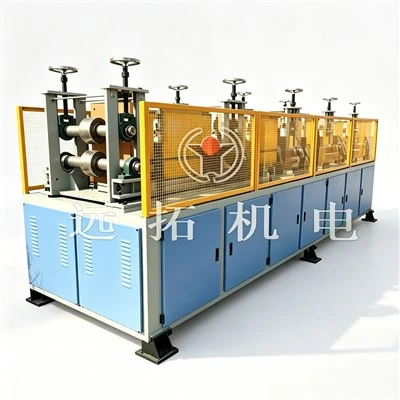
If you’re in the market for a steel plate induction heating line, and you want to talk more about EMF levels, custom builds, or just get answers to any other questions, reach out to us. We don’t do pushy sales stuff, we just build lines that work, and keep your team safe. We’ll walk through every number, every reading, every part of the line, so you feel confident. No surprises, no jargon, just straight talk.
Induction Quenching and Tempering Production Line References
International Commission on Non-Ionizing Radiation Protection (ICNIRP). (2010). Guidelines for limiting exposure to time-varying electric, magnetic, and electromagnetic fields (up to 300 GHz). Health Physics, 99(6), 818–836.
Occupational Safety and Health Administration (OSHA). (2023). Electromagnetic fields: General industry. U.S. Department of Labor.
National Institute for Occupational Safety and Health (NIOSH). (2018). Radiation emissions from industrial induction heating equipment. Current Intelligence Bulletin 66.
World Health Organization (WHO). (2005). Electromagnetic fields and public health: Industrial and medical applications. WHO Press.
Hebei Yuantuo Electromechanical Equipment Manufacturing Co., Ltd.
As one of the most professional manufacturers and suppliers of steel plate induction heating production line in China, our products have good reputation in the market. Please rest assured to buy advanced equipment made in China here and get quotation from our factory. Customized orders are welcome.
Address: Yanshan Street West and Jialingjiang Road North, Economic and Technological Development Zone, Wuqiao County, Cangzhou City, Hebei Province, China
E-mail: yuantuotech01@gmail.com
WebSite: https://www.yuantuoem.com/
