If you’ve ever stood in a garage at 6 a.m., watching a technician yank out a worn differential or swap a slipping clutch to get a delivery truck back on the road, you know transmission parts aren’t just metal and gears—they’re the backbone of almost every moving vehicle on our roads. As someone who’s spent 12 years as a transmission parts supplier, I’ve heard this question a hundred times from fleet managers, independent mechanics, and even everyday car owners: “Which parts give me the best bang for my buck?” It’s not a simple answer, though. Cost-effectiveness isn’t just about the upfront price tag. It’s about downtime, warranty claims, fuel efficiency, and how long a part actually holds up under real, not lab, conditions. Today, I want to break down the most common transmission parts we supply, compare their actual cost-effectiveness, and share what I’ve learned from working with mechanics and fleet teams across North America for more than a decade. Transmission Parts
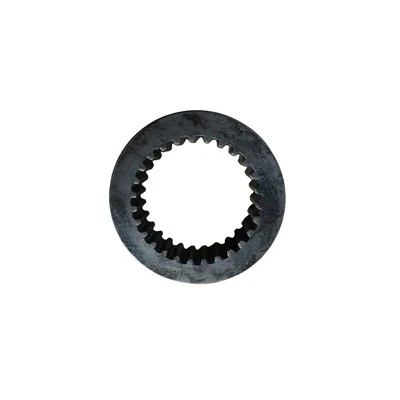
First, let’s get one thing straight: when people ask about cost-effectiveness, most are thinking of two numbers upfront price, and total cost over three to five years. I’ve seen people reach for the cheapest clutch kit on Amazon, only to call me a month later because it failed on a highway, costing them a tow, a second installation, and a day of lost work. On the flip side, I’ve had a customer pay 20% more for a sync assembly that’s still running strong after four years, while the cheaper version they tried before lasted 18 months. So let’s start with the part most often in a transmission rebuild: the clutch kit. Clutch kits come in three main tiers: economy (aftermarket, off-brand), mid-grade (reputable aftermarket), and OEM (original equipment manufacturer, made by the vehicle’s brand or a certified supplier like Bosch or Valeo).
Upfront, an economy clutch kit might cost $150 vs. $250 for mid-grade and $350 for OEM. But let’s look at total cost. For a delivery van that runs 100,000 miles a year, an economy clutch usually needs replacement every 40,000 miles, so over 100,000 miles that’s two replacements, plus labor. Labor for a clutch swap is about $800 on average—so two swaps add $1,600. Total cost: $150 + $1,600 = $1,750. A mid-grade clutch lasts 70,000 miles, so one replacement over 100,000 miles: $250 + $800 = $1,050. OEM lasts 120,000 miles, so no replacement in that stretch: $350 + $0 = $350. That’s a massive difference. But wait—what if the vehicle is a daily driver that only goes 15,000 miles a year? The economy clutch might last two years, mid-grade four, OEM six. Total cost over six years: economy is $1503 + $8002 = $2,050, mid-grade is $250*1.5 + $800 = $1,175, OEM is $350. Still a win for mid-grade or OEM. I’ll admit, economy has its place for people who only need a temporary fix—like someone driving an old car to a job site for a year before replacing it. But for most of our customers, mid-grade or OEM clutch kits are far more cost-effective long-term.
Next, let’s talk about sync assemblies, which are the parts that let you shift gears smoothly, preventing grinding that can destroy other parts over time. Syncs are easy to overlook, but a bad sync can make a transmission fail early, even if all other parts are new. Sync tiers are similar: off-brand aftermarket, reputable aftermarket, OEM. Upfront, an off-brand sync is $30, reputable is $70, OEM is $110. The difference here is less than clutches, but the impact is bigger if it fails. I had a customer last year who installed a $30 off-brand sync in a 2018 pickup truck. Three months later, the sync broke, and the metal shavings got into the transmission fluid, scratching the gears and the bearings. He had to replace the entire transmission, which cost $3,500. If he’d paid $70 for a reputable sync, it would have lasted the life of the transmission, and he’d have saved $3,430. That’s the kind of story that sticks with me. Off-brand syncs often use cheaper materials, like low-grade steel that wears down fast, or don’t have the precision machining that prevents metal shavings. For syncs, I always say: skip the off-brand. Even if the upfront price is half of reputable, the risk of secondary damage makes it not cost-effective. Reputable aftermarket syncs use high-grade steel and meet or exceed OEM specs for most vehicles, so they’re a great middle ground.
Then there’s the differential, which is the part that splits power between the wheels, especially important for trucks, SUVs, and vehicles that tow. Differentials have two main options when you need a replacement: remanufactured and new. A remanufactured differential might cost $1,200, while a new aftermarket or OEM is $2,000. Wait, that’s a big difference upfront—why would anyone pay more for new? Let me explain. Remanufactured differentials are taken from old cores, cleaned, and parts are replaced. But sometimes, the core has hidden damage—like a cracked housing or worn bearings that the remanufacturer misses. That means you might have the differential failing again in a year or two. I had a tow truck driver who bought a reman differential for $1,000, installed it, and it blew out six months later. He had to pay another $800 to have it pulled, plus a new reman that actually worked, plus the tow fee. Total cost: $1,000 + $800 + $300 tow = $2,100, which is more than the $2,000 new differential he could have bought in the first place. That said, not all remanufactured differentials are bad. The ones that come with a 3-year unlimited mileage warranty are worth considering. A reputable reman with a 3-year warranty is $1,500—way cheaper than new, and less risky than no-name reman. For someone driving a passenger car that doesn’t tow heavily, a reputable reman is cost-effective. For a fleet of tow trucks or work trucks that put 50,000 miles a year on their differentials, a new aftermarket differential with a 5-year warranty is a better bet, because the risk of downtime is too high. Downtime for a work truck costs hundreds of dollars a day in lost revenue, so paying a bit more to avoid that is worth it.
Now, let’s talk about transmission fluid and filters—parts people often forget to factor into cost-effectiveness, but they have a huge impact. Fluid changes aren’t just a maintenance task; using the right fluid and changing it regularly extends the life of all transmission parts. I’ve seen a transmission go 300,000 miles because the owner used the correct fluid and changed it every 50,000 miles, while another transmission failed at 100,000 miles because they used cheap fluid and never changed it. Fluid options: generic aftermarket fluid, reputable aftermarket fluid, OEM fluid. Generic fluid is $5 a quart, reputable is $8, OEM is $10. A fluid change takes 10 quarts, so generic is $50, reputable is $80, OEM is $100. Over 100,000 miles, that’s two fluid changes, so generic is $100, reputable is $160, OEM is $200. But the long-term payoff: a transmission that lasts 300,000 miles vs. 150,000 miles. The cost of replacing a transmission is $3,000 to $5,000, so even if you pay $100 more for fluid over 100,000 miles, you avoid spending $3,000 on a new transmission. Filters: off-brand filters are $10, reputable is $25, OEM is $30. The same logic applies here—off-brand filters don’t filter out small metal shavings, so they let those shavings wear down gears and bearings. Reputable filters are made with higher-quality mesh that catches more debris, and they last as long as the fluid change interval. For fluid and filters, the cheapest option is never cost-effective. The small upfront extra saves you thousands in future repairs.
Let’s also not forget about bearings and seals, small parts that are easy to overlook but critical. Bearings and seals come with transmissions as part of a rebuild kit, or as individual parts. Economy rebuild kits include cheap bearings and seals, while premium kits use high-grade, heat-resistant seals and precision bearings. An economy rebuild kit is $200, premium is $400. If you use the economy kit, the seal might leak in a year, and you have to take the transmission apart again to replace it. Labor to take apart and rebuild a transmission is $1,500 on average, so that’s $1,500 in extra labor for a leaky seal. The premium kit’s seals last the life of the transmission, so you pay an extra $200 upfront and avoid $1,500 in labor. For bearings, cheap bearings wear down faster, causing vibration that damages other parts. A premium bearing might last 100,000 miles, while an economy one lasts 30,000. Over time, that adds up to more repairs. I always tell mechanics: when you’re rebuilding a transmission, don’t skimp on the small parts. The $200 or $300 extra for premium seals and bearings is the best investment you can make for the longevity of the job.
Now, I know some of you are thinking: “What about electric vehicles? Transmissions for EVs are different, right?” Yes, they are—most EVs have single-speed transmissions or simpler gear sets, so parts like gear sets and bearings are the main components. For EV parts, the same cost-effectiveness rules apply: mid-grade reputable aftermarket parts are a good balance, and OEM parts are the most reliable for long range. I’ve worked with a few fleet operators with electric delivery vans, and they’ve found that using reputable EV transmission parts saves them money compared to off-brand parts, which have higher failure rates and can take longer to order, leading to downtime.
The big takeaway here is that cost-effectiveness isn’t a one-size-fits-all. If you’re driving a 10-year-old car that you plan to sell in a year, an economy clutch is fine for a quick fix. If you own a fleet of 20 delivery vans that need to be on the road every day, you can’t afford downtime, so you need to invest in mid-grade or OEM parts that last. The key is to calculate total cost over the life of the part, not just the upfront price. Factor in labor, warranty, downtime costs, and secondary damage from cheap parts.

At the end of the day, I’ve spent decades learning that the best transmission parts suppliers don’t just sell parts—they help you figure out what parts make sense for your specific needs. Whether you’re a small business owner with one work truck, a fleet manager with hundreds of vehicles, or an independent mechanic working on customer cars, I’ve got the expertise to help you make the right choice. If you’re planning a transmission repair or rebuild and want to talk through which parts are most cost-effective for your situation, reach out to connect with our team. We’ll walk through your needs, share real-world data from customers like you, and help you get parts that keep your vehicles on the road and your costs under control.
Gear Shafts References
- Automotive Aftermarket Suppliers Association. (2022). Cost-effectiveness of transmission components in light duty vehicles.
- Society of Automotive Engineers. (2021). Effects of material grade on transmission part durability and total ownership cost.
- National Automotive Service Task Force. (2023). Downtime costs for commercial vehicles due to transmission part failures.
- Valeo Transmission Parts Division. (2022). Long-term performance comparison of tiered clutch kit offerings.
Wenling Nanfang Jingtong Gear Factory
As one of the most professional transmission parts manufacturers and suppliers in China, we also support customized service. We warmly welcome you to wholesale bulk high quality transmission parts made in China here from our factory. Also, quotation is available.
Address: Shui’an Village, Ruoheng Town, Wenling City, Taizhou City, Zhejiang Province
E-mail: jt18906566400@126.com
WebSite: https://www.jingtonggear.com/
